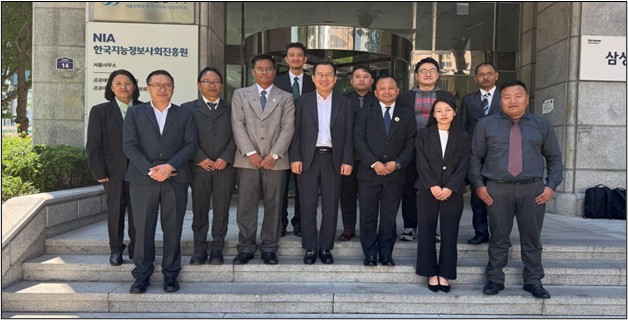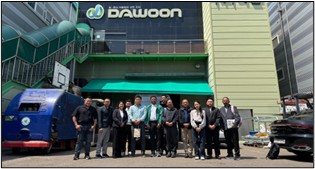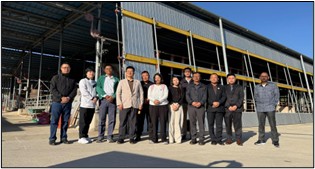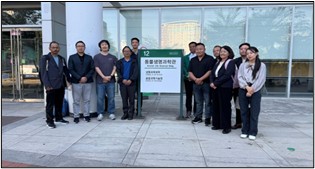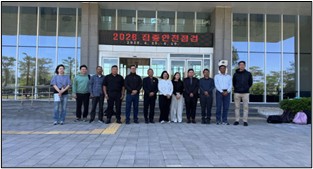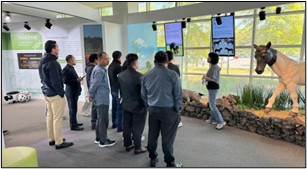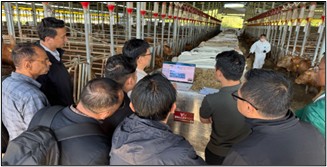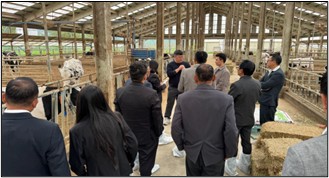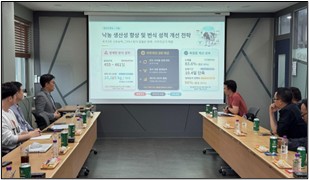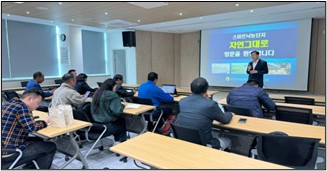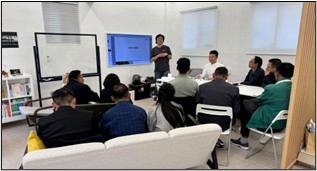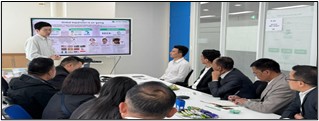
A study tour was organized for 10 officials from the National Dairy Development Centre (NDDC) and the Department of Livestock (DoL) from 3–13 May 2026, under the guidance of the World Bank Country Office and financial support from the World Bank RNR Jobs Project. The visit aimed to strengthen national capacity and learn from Korea’s advanced experiences in smart dairy farming, cattle identification, traceability systems, and digital livestock management.
Objectives of the Study Visit
- Strengthen technical and institutional capacity in smart dairy farming and end-to-end cattle digitalization systems
- Enhance understanding of cattle identification, traceability, and livestock data management systems in the Republic of Korea
- Explore suitable smart dairy technologies for adaptation in Bhutan
- Promote knowledge exchange on precision dairy farming and data-driven decision-making
- Support long-term transformation of Bhutan’s dairy sector into a technology-driven, climate-resilient, and sustainable industry
Key Institutions and Sites Visited
- National Information Society Agency
- BoDit
- Dawoon Co., Ltd
- Konkuk University and Antller Inc.
- Dangjin Dairy Cooperative (Giga Smart Dairy Farm – Jayeon Geudaero Complex)
- Info Valley Korea (CowGo)
- National Institute of Animal Science
- Hankook IoT Corp.
- IoT-based Hanwoo Cattle Breeder Farm (Gimcheon)
- Seoul National University – Pyeongchang Campus Dairy Farm
Key Learning Highlights
The Republic of Korea’s dairy sector has rapidly advanced through IoT and AI-based smart farming systems. Technologies such as smart collars, bio-capsules (smart bolus), AI-enabled cameras, robotic milking systems, and big data platforms are widely used for real-time monitoring, disease detection, heat detection, reproduction management, and production optimization.
Strong collaboration between government, universities, and private companies is driving innovation and commercialization of cost-effective livestock technologies. These systems are also supporting traceability, product safety, and quality assurance in both dairy and beef value chains, including Hanwoo cattle.
Large smart dairy farms demonstrated significant improvements in efficiency, including reduced labour requirements, lower production costs, improved milk quality monitoring, and enhanced herd health management through data-driven decision-making.
Relevance to Bhutan
While most technologies observed are still emerging in Bhutan’s context, particularly for smallholder systems, they offer strong potential for phased and context-appropriate adoption. The visit highlighted the importance of gradually introducing smart livestock technologies to address labour shortages, improve productivity, and modernize the dairy sector.
Key Recommendations
- Pilot selected IoT tools (smart collars, sensors, and farm management systems) in government dairy farms
- Establish demonstration smart dairy farms and learning centres at NDDC Yusipang and Regional Cattle Breeding Centre, Wangkha
- Strengthen collaboration with Korean institutions and private technology companies for knowledge transfer and technical support
- Integrate smart livestock technologies with the National Dairy Information System (NDIS)
- Promote cost-sharing and targeted incentives for adoption of proven technologies
- Build national capacity in AI, IoT, and precision livestock management
- Develop phased national roadmaps for smart and AI-driven dairy transformation aligned with Bhutan’s AI Strategy 2025